

Program

| Sunday (8 Oct) | ||
| 17:30 | Registration | |
| 18:00 | Welcome Reception | |
| 18:30 | ||
| 19:00 | ||
| 19:30 | ||
| Monday (9 Oct) | ||
| 08:30 | Registration | |
| 09:00 | Opening | |
| 09:30 | Keynote: Hiroo Iwata | |
| 10:00 | ||
| 10:30 | Morning Tea | Posters & Demos |
| 11:00 | Paper Session 1: Locomotion & Games |
|
| 11:30 | ||
| 12:00 | ||
| 12:30 | Lunch | |
| 13:00 | ||
| 13:30 | Paper Session 2: Interaction I |
|
| 14:00 | ||
| 14:30 | ||
| 15:00 | Afternoon Tea | |
| 15:30 | Paper Session 3: Interaction II |
|
| 16:00 | ||
| 16:30 | ||
| 17:00 | Paper Session 4: Displays & Perception |
|
| 17:30 | ||
| 18:00 | ||
| 18:30 | Reception at JIX Reality Ltd. | |
| 19:00 | ||
| 19:30 | ||
| 20:00 | ||
| Tuesday (10 Oct) | ||
| 08:30 | Registration | |
| 09:00 | Paper Session 5: Assistive & Gaze |
Posters & Demos |
| 09:30 | ||
| 10:00 | ||
| 10:30 | Morning Tea | |
| 11:00 | Panel | |
| 11:30 | ||
| 12:00 | ||
| 12:30 | Lunch | |
| 13:00 | ||
| 13:30 | Paper Session 6: Teaching & Collaboration |
|
| 14:00 | ||
| 14:30 | ||
| 15:00 | Afternoon Tea | |
| 15:30 | Paper Session 7: Technologies in the Wild |
|
| 16:00 | ||
| 16:30 | ||
| 17:00 | Posters & Demos | |
| 17:30 | ||
| 18:00 | ||
| 18:30 | Banquet Keynote: Rangi Mātāmua |
|
| 19:00 | ||
| 19:30 | ||
| 20:00 | ||
| 20:30 | ||
| 21:00 | ||
| Wednesday (11 Oct) | ||
| 08:30 | Registration | |
| 09:00 | Paper Session 8: Measuring Behaviour |
Posters & Demos |
| 09:30 | ||
| 10:00 | ||
| 10:30 | Morning Tea | |
| 11:00 | Paper Session 9: Haptics & Operation |
|
| 11:30 | ||
| 12:00 | ||
| 12:30 | Lunch | |
| 13:00 | ||
| 13:30 | Keynote: Misha Sra | |
| 14:00 | ||
| 14:30 | Afternoon Tea | |
| 15:00 | Paper Session 10: Redirection |
|
| 15:30 | ||
| 16:00 | ||
| 16:30 | Closing | |
| 17:00 | ||
| 17:30 | Lab Visit: HIT Lab NZ |
|
| 18:00 | ||
| 18:30 | ||
| 19:00 | ||
| 19:30 | ||
| 20:00 | ||
Sponsors
Platinum
Gold


Silver


Bronze


Supporters


Sunday, 8 Oct:
Location: Conway Rooms 4&5, Te Pae Convention Centre
17:30-18:00 | Registration |
18:00-20:00 | Welcome Reception |
Monday, 9 Oct:
Location: Conway Rooms 1-5, Te Pae Convention Centre
08:30-09:00 | Registration |
09:00-09:30 | Opening |
09:30-10:30 | Keynote: Hiroo Iwata |
10:30-11:00 | Morning Tea |
11:00-12:30 | Paper Session 1: Locomotion & Games Session Chair: Frank Steinicke Planning Locomotion Techniques for Virtual Reality Games Versatile Mixed-method Locomotion under Free-hand and Controller-based Virtual Reality Interfaces Exploring User Engagement in Immersive Virtual Reality Games through Multimodal Body Movements Cross-Reality Gaming: Comparing Competition and Collaboration in an Asymmetric Gaming Experience |
12:30-13:30 | Lunch |
13:30-15:00 | Paper Session 2: Interaction Ⅰ Session Chair: Benjamin Weyers Does One Keyboard Fit All? Comparison and Evaluation of Device-Free Augmented Reality Keyboard Designs Exploring Augmented Reality for Situated Analytics with Many Movable Physical Referents Exploring Users’ Pointing Performance on Virtual and Physical Large Curved Displays Re-investigating the Effect of the Vergence-Accommodation Conflict on 3D Pointing |
15:00-15:30 | Afternoon Tea |
15:30-17:00 | Paper Session 3: Interaction Ⅱ Session Chair: Wallace Lages Dialogues For One: Single-User Content Creation Using Immersive Record and Replay Dynascape: Immersive Authoring of Real-World Dynamic Scenes with Spatially Tracked RGB-D Videos Exploring Unimodal Notification Interaction and Display Methods in Augmented Reality Intuitive User Interfaces for Real-Time Magnification in Augmented Reality |
17:00-18:00 | Paper Session 4: Displays & Perception Session Chair: Aaron Quigley Retinal Homing Display: Head-Tracking Auto-stereoscopic Retinal Projection Display When Filters Escape the Smartphone: Exploring Acceptance and Concerns Regarding Augmented Expression of Social Identity for Everyday AR From Clocks to Pendulums: A Study on the Influence of External Moving Objects on Time Perception in Virtual Environments |
10:30-18:00 | Poster & Demos |
Location: 213 Tuam Street, Christchurch
18:30-20:30 | Reception at JIX Reality Ltd. One of our sponsors, JIX Reality Ltd. (https://jix.co.nz/), will host a Fireside Chat on “XR in Canterbury - Past, Present and Beyond!” Space is limited to 50 for this FREE event, but you must register if you would like to attend. For more information, and to register, follow this link: https://tinyurl.com/vrstjixevent If you register, but your plans change, please notify JIX, so someone can be taken from the waiting list. |
Tuesday, 10 Oct:
Location: Conway Rooms 1-5, Te Pae Convention Centre
08:30-09:00 | Registration |
09:00-10:30 | Paper Session 5: Assistive & Gaze Session Chair: Isaac Cho Visual Hearing Aids: Artificial Visual Speech Stimuli for Audiovisual Speech Perception in Noise Music Therapy in Virtual Reality for Autistic Children with Severe Learning Disabilities Gaze Assistance for Older Adults during Throwing Training in Virtual Reality and its Effects on Performance and Motivation GazeRayCursor: Facilitating Virtual Reality Target Selection by Blending Gaze and Controller Raycasting |
10:30-11:00 | Morning Tea |
11:00-12:30 | Panel |
12:30-13:30 | Lunch |
13:30-15:00 | Paper Session 6: Teaching & Collaboration Session Chair: Mathieu Barthet Evaluating Augmented Reality Communication: How Can We Teach Procedural Skill in AR? Hands-on DNA: Exploring the Impact of Virtual Reality on Teaching DNA Structure and Function Comparing Collaborative Visualization Behaviors in Desktop and Augmented Reality Environments Vicarious: Context-aware Viewpoints Selection for Mixed Reality Collaboration |
15:00-15:30 | Afternoon Tea |
15:30-17:00 | Paper Session 7: Technologies in the Wild Session Chair: Ali Adjorlu Ready Worker One? High-Res VR for the Home Office UniteXR: Joint Exploration of a Real-World Museum and its Digital Twin Comparing Mixed Reality Agent Representations: Studies in the Lab and in the Wild Dynamic Theater: Location-Based Immersive Dance Theater, Investigating User Guidance and Experience |
18:30-21:00 | Banquet - Keynote: Rangi Mātāmua |
09:00-18:00 | Poster & Demos |
Wednesday, 11 Oct:
Location: Conway Rooms 1-5, Te Pae Convention Centre
08:30-09:00 | Registration |
09:00-10:30 | Paper Session 8: Measuring Behaviour Session Chair: Stefanie Zollmann Revisiting Consumed Endurance: A NICE Way to Quantify Shoulder Fatigue in Virtual Reality Cognitive Load Measurement with Physiological Sensors in Virtual Reality during Physical Activity Exploring the Stability of Behavioral Biometrics in Virtual Reality in a Remote Field Study: Towards Implicit and Continuous User Identification through Body Movements Beyond Mirrors: Exploring Behavioral Changes through Comparative Avatar Design in VR Taiko Drumming |
10:30-11:00 | Morning Tea |
11:00-12:30 | Paper Session 9: Haptics & Operation Session Chair: Aluna Everitt Effect of Virtual Hand’s Fingertip Deformation on the Stiffness Perceived Using Pseudo-Haptics Predicting Perceptual Haptic Attributes of Textured Surface from Tactile Data Based on Deep CNN-LSTM Network Exploring Real-time Precision Feedback for AR-assisted Manual Adjustment in Mechanical Assembly Exploring Visual Augmentations for Improving the Operation of a Hydraulic Excavator using Expert Operation Replay |
12:30-13:30 | Lunch |
13:30-14:30 | Keynote: Misha Sra |
14:30-15:00 | Afternoon Tea |
15:00-16:30 | Paper Session 10: Redirection Session Chair: Victoria Interrante Redirected Placement: Evaluating the Redirection of Passive Props during Reach-to-Place in Virtual Reality Instant Hand Redirection in Virtual Reality Through Electrical Muscle Stimulation-Triggered Eye Blinks Redirecting Rays: Evaluation of Assistive Raycasting Techniques in Virtual Reality Stay Vigilant: The Threat of a Replication Crisis in VR Locomotion Research |
16:30-17:30 | Closing |
09:00-15:00 | Poster & Demos |
Location: Level 2, John Britten Building, 69 Creyke Road, Ilam, Christchurch
17:30-20:00 | Lab Vist: HIT Lab NZ |
Keynotes
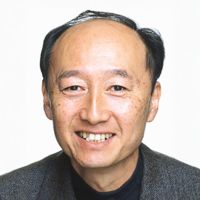
Prof. Hiroo Iwata
Faculty of Data Science,
Mussashino University
Title:
Beyond HMD: Four Key Technologies for Advanced Virtual Reality
Abstract:
Although HMD is a typical device for virtual reality, it has limitations. Firstly, it cannot provide a sense of touch. Haptics is inevitable in some VR applications. This talk presents major methods for the implementation of haptic interfaces. Secondly, HMD itself cannot provide a sense of walking. Walking on foot is the best navigation method, but it is difficult to realize in virtual environments. The locomotion interface enables physical walking while the user is maintained in the real world. Projection-based VR also provides a walking experience in the room with surrounding images. Motion base technology enables full-body motion of the user and enhances the sense of walking. This talk introduces achievements in these technologies.
Biography:
Hiroo Iwata started projects on virtual reality in 1986 at the University of Tsukuba. His research interests include embodied sensations such as haptics and locomotion. He exhibited his work at the Emerging Technologies venue of the SIGGRAPH every year from 1994 to 2007. He was the general chair of the World Haptics Conference 2007 as well as Asia Haptics 2014. He launched the Ph.D. Program in Empowerment Informatics at the University of Tsukuba in 2013. He was the president of the Virtual Reality Society Japan from 2016 to 2019. He retired from the University of Tsukuba in 2023, and moved to the Faculty of Data Science of Mussashino University where he launched a new project “Data Sensorium”.
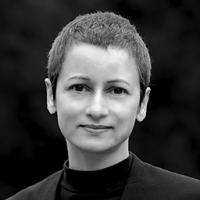
Misha Sra
Gerngross Assistant Professor
Computer Science,
University of California
Title:
Human++: Augmenting our Physical Abilities with AI and XR
Abstract:
In this talk, I will share my vision of augmenting human physical abilities with AI and XR. Imagine you are recovering from a musculoskeletal injury, and your therapist is an AI who appears alongside you in augmented reality. They work with you through your rehab exercises, monitoring your progress and making adjustments to the routine based on your capabilities. They provide encouragement and reassurance throughout the process, helping you stay motivated and focused on your recovery goals. In this vision, AI is no longer just something we interact with through our screens, but something that can actually be part of our physical world. It is not just an information source or a digital companion, but a physical presence that can assist us with motor tasks. The new AI-XR paradigm presents a big leap forward in terms of the way we think about and interact with AI. Instead of something that is separate from us, AI becomes a true extension of ourselves, enhancing our capabilities in the real world.
Biography:
Misha Sra is the John and Eileen Gerngross Assistant Professor of Computer Science at the University of California, Santa Barbara where she directs the Human-AI Integration Lab in the Computer Science department at UCSB. Misha received her PhD from the MIT Media Lab in 2018, advised by Prof. Pattie Maes in the Fluid Interfaces Group. She has published at the most selective HCI, VR, and machine learning venues such as CHI, UIST, VRST, AAAI, and CVPR where she received four best paper awards and honorable mentions. From 2014-2015, she was a Robert Wood Johnson Foundation wellbeing research fellow at the Media Lab. In spring 2016, she received the Silver Award in the annual Edison Awards Global Competition that honors excellence in human-centered design and innovation. MIT selected her as an EECS Rising Star in 2018. In 2023 she was awarded an NSF CAREER Award for her work in Human-AI Interaction Design. Her research has received extensive media coverage from leading media outlets (e.g., from Engadget, UploadVR, MIT Tech Review) and has drawn the attention of industry research, such as Toyota Research, Samsung Research, and Unity 3D.

Professor Rangi Mātāmua (Tūhoe), PhD ONZM FRSNZ
Ahorangi, Professor of Mātauranga Māori, Te Pūtahi a Toi,
Massey University
Title:
Language, Culture, Ceremony and Technology
Abstract:
In this talk, I will discuss the links between language, culture, ceremony, and technology and how these intersect with each other. In this discussion, I will share a vision of how new technologies can revolutionise how we reclaim, learn, share, and shape Indigenous knowledge as part of a continued process of decolonisation.
Biography:
New Zealander of the Year Professor Rangi Mātāmua (Tūhoe) is a Professor of Mātauranga Māori at Te Pūtahi a Toi, Massey University, and a pioneering Māori scholar who has revolutionised understandings of Māori astronomy, and in particular Matariki. His research has been ground-breaking in terms of its contribution to mātauranga Māori and he has enlightened both national and international populations on the mātauranga of astronomy. His research is situated at the interface between mātauranga Māori and Western science and he is helping to reconnect people with maramataka – the Māori lunar calendar – and the environment. Rangi is also part of a wider movement, reclaiming Indigenous astronomy as part of a continued process of decolonisation. He has won the 2019 Prime Minister’s Science Communication Prize, the 2020 Callaghan Medal for science communication from Royal Society Te Apārangi, the 2020 Matariki Awards for Education, and the 2023 Kiwibank New Zealander of the year. He was appointed by the Prime Minister as the Chief Advisor Matariki and Mātauranga Māori chaired the Matariki Advisory Group, and was appointed as the government’s chief advisor on Matariki for the Ministry of Arts, Culture and Heritage, Manatū Taonga.
Panel
Creating Tikanga in VR:
Join this panel of Tohunga (Traditional Māori Knowledgekeepers) and Māori Researchers as they traverse the Metaverse; Virtual reality has presented new opportunities and challenges for Te Ao Māori (The Māori World).
This panel discussion will delve into what Tikanga (Māori Protocols) looks like in VR, and how it can be applied to VR. You will be left with a deeper understanding of the connection between Tikanga and Technology, how Virtual Reality is being used, and how it can be applied in different cultural contexts.
Panelists:

Prof Hēmi Whaanga
Bio:
Professor Whaanga is a linguist who has more than 20 years’ experience as a Māori educator focused on linguistics, te reo Māori, curriculum and syllabus design, ICT, mātauranga Māori, and ethics. He has taught a range of Māori research methodology and theory, Mātauranga Māori and Indigenous Knowledges, and Mātauranga Māori and science papers in tertiary mainstream programs. Professor Whaanga has a particular interest in multi-method techniques, methodologies and processes that analyse, develop and protect new and sacred mātauranga and te reo Māori in a range of linguistic, cultural and digital contexts. He has worked as a project leader and researcher on a range of projects including curriculum development, Artificial Intelligence and Virtual realties, ICT and digital repositories, ethics and digitisation, technology, ecological taxonomy and naming, and Māori astronomy. He currently leads a Science for Technological Innovation Spearhead (SfTI) NSC ‘Ātea’ project to develop conceptual frameworks for AI, Virtual and Augmented Realities, Natural Language Processing, Machine Learning, Indigenous and Māori data sovereignty and digital repositories.

Te Kanapu Anasta
Bio:
Te Kanapu Anasta, with Ngāi Tūhoe and Greek Macedonian heritage, was born and raised in Australia with his Greek Macedonian family. Growing up, he was fully immersed in their language and customs. Later in life, Te Kanapu returned to New Zealand, where he embarked on a journey to reconnect with his Tūhoe language and traditions.
This path ultimately led him to a successful career as a teacher of te reo Māori me ngā tikanga (the Māori language and customs). Additionally, Te Kanapu thrives in fields such as translation, interpretation, and consultation.
Currently, Te Kanapu is a member of a research team as part of a tohunga group (experts) in Māori customs and practices, under the guidance of professors Pou Temara and Rangi Matamua along with other esteemed academics and experts from the University of Otago, the University of Canterbury, and Massey University. This collective is collaborating to explore the integration of kawa and tikanga (Māori customs and protocols) in emerging technologies. Their current focus involves the development of engaging virtual reality experiences and other interactive and immersive technologies.

Kristin Ross
Bio:
Kristin Ross (Ngāti Kahu, Ngāti Tara), is a dedicated advocate for te reo Māori and tikanga Māori, committed to creating safe spaces for their flourishing across various industries and expertise. She has cultivated a unique path alongside her husband Hōhepa Tuahine (Ngāti Whakaue, Tūhoe), as a screen producer, seamlessly blending traditional Māori knowledge and contemporary technologies, allowing Māori culture and mātauranga to thrive in the digital age.
While Kristin is not a VR or AR specialist, her work has been instrumental in bringing Māori knowledge and ways of knowing to a global audience through innovative screen productions. She is deeply committed to ensuring that Māori have control over their mātauranga, their unique intellectual property.
As an entrepreneur, she has had the privilege of launching groundbreaking products like Pipi Mā, which has empowered the spread of te reo Māori in homes through play and screen. Additionally, in collaboration with New Zealander of the Year Professor Rangi Matamua, Kristin has played a pivotal role in raising national awareness for Matariki through screen productions such as "Living by the Stars" and "Beyond Matariki.
At this VR conference, she looks forward to discussing how VR can further amplify efforts to preserve and celebrate Māori culture. Together, the panel will explore the potential of VR as a bridge between traditional knowledge and cutting-edge technology, ensuring that the heritage not only endures but thrives in this digital era.

Tiriana Anderson
Bio:
Tiriana Anderson, a passionate Māori culture researcher and Massey University student, champions Tikanga as a best practice model for developing and applying new social technologies such as Virtual Reality. He contributes his expertise to the Ātea Project, supporting NLP tools, Iwi repositories, and Virtually Immersive Wānanga. Tiriana holds multiple portfolios within his Iwi and on his Marae's, he works diligently to ensure his Iwi among all others, understand the opportunities Virtual Reality and Digital Technology can provide for all aspects of development.
Posters
POSTER SESSIONS:
Daily During Morning & Afternoon Tea and Lunch, and Tuesday from 17:00-18:00
- Fabric Electrodes for Physiological Sensing in a VR HMD
Nicholas Strachan, Jyoti Kalyanji, Andrew Lowe, Amit Barde, Mark Billinghurst - The Effect of Virtual Reality Level of Immersion on Spatial Learning Performance and Strategy Usage
Michal Gabay, Tom Schonberg - Temporal Foveated Rendering for VR on Modern Mobile Architecture
Rohit Rao Padebettu, Todd Keeler, Steven Lansel - Effects of symmetrical avatar arm movements on the sense of ownership of both hands inverted in a mirror
Toko Fujita, Moeki Horii, Luis David Torres Mailleux, Masatatsu Miyagi, Yukihiko Okada, Keiichi Zempo - A Pilot Study on the Impact of Discomfort Relief Measures on Virtual Reality Sickness and Immersion
Hanseob Kim, Jaehoon Kim, Dongyoon Joo, Gerard Jounghyun Kim - Effects of Vibrotactile Feedback on Aim-and-Throw Tasks in Virtual Environments
Jaewan Lim, Jeonghyeon Kim, Dongjun Lee, Yongjae Yoo - Enhancing VR Experience using a Mounted Olfactory System
Je-Won Myung, Ye-Chan Choi, Si-Yeon Park, So-Hui Kim, Dongyun Han, Isaac Cho, Chang-Geun Song, Sun-Jeong Kim - SpaceVR: Virtual Reality Space Science Outreach Experience
Benjamin Sanson, Craig Anslow, Alex Doronin, Yvette Perrott, Tulasi Parashar - Utilizing AR as a Tool for Assessing Accessibility in the Home
Kevin Ponto, Ross Tredinnick, Rachael Shields, Beth Fields, Jung-hye Shin - Enhancing VR Based Serious Games and Simulations Design: Bayesian Knowledge Tracing and Pattern-Based Approaches
Jan K. Argasiński, Natalia Lipp - Exploratory Study on the Reinstatement Effect Under 360-Degree Video-Based Virtual Environments
Takato Mizuho, Takuji Narumi, Hideaki Kuzuoka - Walking-in-Flat-Place on Non-flat Virtual Environment can be Sickening!
Seunghoon Park, Seungwoo Son, Hyemin Shin, Gerard Jounghyun Kim - Effects of Source Location, Loudness, and Understanding of Speech on Interpersonal Distance in a Virtual Environment
Kota Takahashi, Yasuyuki Inoue, Michiteru Kitazaki - Movement Creation by Choreographers with a Partially Self-controllable Human Body in VR
Asako Soga, Takumu Matsushita - Design of Time-Continuous Emotion Rating Interfaces
Jason W. Woodworth, Christoph W. Borst - Directional Multimodal Flow to Help Mitigate VR Sickness
Sungjun Lee, Gerard Jounghyun Kim - Whispering salesperson: perceptual illusion of interpersonal distance and ventriloquism effect in service of virtual environment by use of whisper voice
Mizuki Yabutani, Azusa Yamazaki, Naoto Wakatsuki, Yukihiko Okada, Keiichi Zempo - XR for Improving Cardiac Catheter Ablation Procedure
Nisal Udawatta, Craig Anslow, Brian Robinson - Diving Into The Twilight Zone VR for Marine Science
James Bell, Alice Rogers, Kristian Hansen, Craig Anslow, Simon McCallum - The Effects of Customized Strategies for Reducing VR Sickness
Yechan Yang, Hanseob Kim, Gerard Jounghyun Kim - Simple and Practical Dual Rendering for Reducing Eye Fatigue from Vergence-Accommodation Conflict in Stereoscopic Viewing
Jae-eun Kim, Gerard J. Kim - Reducing Sensing Errors in a Mixed Reality Musical Instrument
Max Graf, Mathieu Barthet - Waddle: using virtual penguin embodiment as a vehicle for empathy and informal learning
Kevin Ponto, Ross Tredinnick, Monae Verbeke, Kaldan Kopp, Luke Swanson, David Gagnon - Visually Augmenting Underfoot Tactile Perception in Augmented Virtuality
Jack Topliss, Stephan Lukosch, Euan Coutts, Thammathip Piumsomboon - Study of Visual Guidance Cues in VR Field Trips at High Schools
Jason W. Woodworth, Christoph W. Borst, Yitoshee Rahman, Arun Kulshreshth - VR Experiences of Pregnant Women During Antenatal Care
Lorna Massov, Brian Robinson, Robyn Maude, Edgar Rodriguez Ramirez, Craig Anslow - Effect of voice imitation using voice conversion by avatar on customer service in Virtual Environments
Hiiro Okano, Naoto Wakatsuki, Yukihiko Okada, Keiichi Zempo - Stress visualization in geometrically complex structures using Thermoelastic Stress Analysis and Augmented Reality
Ayman Mukhaimar, Ruwan Tennakoon, Nik Rajic, Fabio Zambetta, Pier Marzocca, Reza Hoseinnezhad, Chris Brooks, Stephen Van der Velden, Kheang Khauv - The Staircase Procedure Toolkit: Psychophysical Detection Threshold Experiments Made Easy
André Zenner, Kristin Ullmann, Chiara Karr, Oscar Ariza, Antonio Krüger - Sickness Reduction in FPV Drone Control: Improved Effects of Reverse Optical Flow with Static Landmarks Only
Jun Ryu, Seunghoon Park, Gerard Jounghyun Kim - Pain Distraction for Children Through VR- or Audio-haptic Soundscapes in Situ
Maya Bordum, Emil Engberg, Peter Blomsgård Hansen, Nickolai Frederik Schouborg Jensen, Martin Fritzbøger Jægerlund, Jeppe Nygaard Mouritzen, Hannibal Hjelming Poulsen, Lukas Gade Ravnsborg, Celine Zeh Rybak, Frederik Hald Stappert, Bjørn Troldahl, Julius Ebenau Winther, Rolf Nordahl - Performing Tasks in Virtual Reality. Interplay between Realism and Visual Imagery
Natalia Lipp, Paweł Strojny, Agnieszka Strojny, Sławomir Śpiewak, Jan K. Argasiński, Przemysław Korzeniowski - The Effect of False but Stable Heart Rate Feedback via Sound and Vibration on VR User Experience
Dongyun Joo, Hanseob Kim, Gerard Jounghyun Kim - The Detectability of Saccadic Hand Offset in Virtual Reality
André Zenner, Chiara Karr, Martin Feick, Oscar Ariza, Antonio Krüger - Audio-based Vibrotactile Feedback in Multimodal VR Interactions
Oscar Ariza, Felix Steiner, André Zenner, Frank Steinicke - ShadowPlayVR: Understanding Traditional Shadow Puppetry Performance Techniques Through Non-Intuitive Embodied Interactions
Yihao He - A Virtualized Augmented Reality Simulation for Exploring Perceptual Incongruencies
Franziska Westermeier, Larissa Brübach, Carolin Wienrich, Marc Erich Latoschik - Early User Feedback on a VR Interface Draft for Interaction with a Multi-Robot System in Ship Hull Inspection
Jan P. Gründling, Benjamin Weyers - Navigating in VR using free-hand gestures and embodied controllers: A comparative evaluation
Puneet Jain - Estimating mechanical properties of soft objects using surface measurements from AR headsets
Max Dang Vu, Gonzalo D. Maso Talou, Huidong Bai, Mark Billinghurst, Poul M.F. Nielsen, Martyn P. Nash, Thiranja P. Babarenda Gamage - Comparing Performance of Dry and Gel EEG Electrodes in VR using MI Paradigms
Mohammad Ahmadi, Alireza Farrokhi Nia, Samantha W. Michalka, Alexander L. Sumich, Burkhard C. Wünsche, Mark Billinghurst - Listen again: virtual reality based training for children with hearing impairments
Stefania Serafin, Ali Adjorlu, Lone Jantzen, Lærke Hammer, Nete Rudbeck Kamper Lone Marianne Percy-Smith - ActioNet: A Lightweight Architecture for Efficient Action Recognition
Mohammed El Amine MOKHTARI, Elias Ennadifi, Matei Mancas, Bernard Gosselin - Augmented Aroma: The Influence of Augmented Particles' Movement and Color on Emotion during Olfactory Perception
Ye-Ji Jin Pukyong, Masaki Omata, Won-Du Chang, Xiaoyang Mao
Demos
DEMO SESSIONS:
Daily During Morning & Afternoon Tea and Lunch, and Tuesday from 17:00-18:00
- Study of User Training Methods Using Onomatopoeia in Brain Computer Interfaces Based on Mental Imagery
Reo Hirano, Keita Watanabe - Emotional Enhancement Techniques in Online Music Concerts by Presenting Force Stimuli from Light Sticks
Masanori Yokoyama, Motohiro Makiguchi, Wakana Oshiro, Haruno Kataoka, Rika Mochizuki, Ryuji Yamamoto - Deforming Skin Illusion by Visual-tactile Stimulation
Gakumaru Haraguchi, Michiteru Kitazaki - Combining embodiment and 360º video for teaching protection of civilians to military officers
Jose Garcia-Estrada, Ekaterina Prasolova-Førland, Stian Kjeksrud, Petter Lindqvist, Kristine Kvam, Ole Midthun, Knut Sverre, Syver Lauritzen - Immersive visualization for ecosystem services analysis
Benjamin T. Powley, Craig Anslow, Mairéad de Róiste, Stuart Marshall - Immersive Climate Narratives: Using Extended Reality to Raise Climate Change Awareness
Ines Said, Austin Stanbury, Erica Del hagen, Hyo Jeong Kang - Pigments of Imagination: An Interactive Virtual Reality Composition
Timothy Gmeiner, Eito Murakami - Open Video Game Library: Developing a Video Game Database for Use in Research and Experimentation
Kazuya Iida, Yuma Ina, Daichi Hayashi, Yohei Yanase, Keita Watanabe - Slingshot: A Novel Gesture Locomotion Technique for Fast-paced Gameplay in Virtual Reality
Giles McGrath, Jeremy Kiel, Steven Wheeler, Tham Piumsomboon, Adrian Clark, Simon Hoermann - Earnormous: An educational VR game about how humans hear
Signe Toftgaard Henriksen, Franciska Kruse Ifversen, Asger Arendt Langhoff, Atle Søeborg Nyhus, Hector Thøgersen, Ali Adjorlu, Stefania Serafin - Enhancing VR Experience using a Mounted Olfactory System
Je-Won Myung, Ye-Chan Choi, Si-Yeon Park, So-Hui Kim, Dongyun Han, Isaac Cho, Chang-Geun Song, Sun-Jeong Kim