

Keynotes
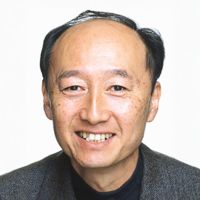
Prof. Hiroo Iwata
Faculty of Data Science,
Mussashino University
Title:
Beyond HMD: Four Key Technologies for Advanced Virtual Reality
Abstract:
Although HMD is a typical device for virtual reality, it has limitations. Firstly, it cannot provide a sense of touch. Haptics is inevitable in some VR applications. This talk presents major methods for the implementation of haptic interfaces. Secondly, HMD itself cannot provide a sense of walking. Walking on foot is the best navigation method, but it is difficult to realize in virtual environments. The locomotion interface enables physical walking while the user is maintained in the real world. Projection-based VR also provides a walking experience in the room with surrounding images. Motion base technology enables full-body motion of the user and enhances the sense of walking. This talk introduces achievements in these technologies.
Biography:
Hiroo Iwata started projects on virtual reality in 1986 at the University of Tsukuba. His research interests include embodied sensations such as haptics and locomotion. He exhibited his work at the Emerging Technologies venue of the SIGGRAPH every year from 1994 to 2007. He was the general chair of the World Haptics Conference 2007 as well as Asia Haptics 2014. He launched the Ph.D. Program in Empowerment Informatics at the University of Tsukuba in 2013. He was the president of the Virtual Reality Society Japan from 2016 to 2019. He retired from the University of Tsukuba in 2023, and moved to the Faculty of Data Science of Mussashino University where he launched a new project “Data Sensorium”.
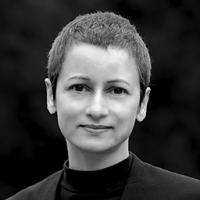
Misha Sra
Gerngross Assistant Professor
Computer Science,
University of California
Title:
Human++: Augmenting our Physical Abilities with AI and XR
Abstract:
In this talk, I will share my vision of augmenting human physical abilities with AI and XR. Imagine you are recovering from a musculoskeletal injury, and your therapist is an AI who appears alongside you in augmented reality. They work with you through your rehab exercises, monitoring your progress and making adjustments to the routine based on your capabilities. They provide encouragement and reassurance throughout the process, helping you stay motivated and focused on your recovery goals. In this vision, the AI is no longer just something we interact with through our screens, but something that can actually be part of our physical world. It is not just an information source or a digital companion, but a physical presence that can assist us with motor tasks. The new AI-XR paradigm presents a big leap forward in terms of the way we think about and interact with AI. Instead of something that is separate from us, AI becomes a true extension of ourselves, enhancing our capabilities in the real world.
Biography:
Misha Sra is the John and Eileen Gerngross Assistant Professor of Computer Science at the University of California, Santa Barbara where she directs the Human-AI Integration Lab in the Computer Science department at UCSB. Misha received her PhD from the MIT Media Lab in 2018, advised by Prof. Pattie Maes in the Fluid Interfaces Group. She has published at the most selective HCI, VR, and machine learning venues such as CHI, UIST, VRST, AAAI, and CVPR where she received four best paper awards and honorable mentions. From 2014-2015, she was a Robert Wood Johnson Foundation wellbeing research fellow at the Media Lab. In spring 2016, she received the Silver Award in the annual Edison Awards Global Competition that honors excellence in human-centered design and innovation. MIT selected her as an EECS Rising Star in 2018. In 2023 she was awarded an NSF CAREER Award for her work in Human-AI Interaction Design. Her research has received extensive media coverage from leading media outlets (e.g., from Engadget, UploadVR, MIT Tech Review) and has drawn the attention of industry research, such as Toyota Research, Samsung Research, and Unity 3D.
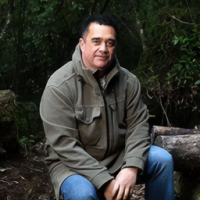
Professor Rangi Mātāmua (Tūhoe), PhD ONZM FRSNZ
Ahorangi, Professor of Mātauranga Māori, Te Pūtahi a Toi,
Massey University
Title:
Coming soon!
Abstract:
Coming soon!
Biography:
New Zealander of the Year Professor Rangi Mātāmua (Tūhoe) is Professor of Mātauranga Māori at Te Pūtahi a Toi, Massey University and a pioneering Māori scholar who has revolutionised understandings of Māori astronomy, and in particular Matariki. His research has been ground-breaking in terms of its contribution to mātauranga Māori and he has enlightened both national and international populations on the mātauranga of astronomy. His research is situated at the interface between mātauranga Māori and Western science and he is helping to reconnect people with maramataka – the Māori lunar calendar – and the environment. Rangi is also part of a wider movement, reclaiming Indigenous astronomy as part of a continued process of decolonisation. He has won the 2019 Prime Minister’s Science Communication Prize, the 2020 Callaghan Medal for science communication from Royal Society Te Apārangi, the 2020 Matariki Awards for Education and the 2023 Kiwibank New Zealander of the year. He was appointed by the Prime Minister as the Chief Advisor Matariki and Mātauranga Māori, chaired the Matariki Advisory Group, and appointed as the government’s chief advisor on Matariki for the Ministry of Arts, Culture and Heritage, Manatū Taonga.
Sponsors
Platinum
Gold


Silver


Bronze

Supporters


